
University-wide common classes
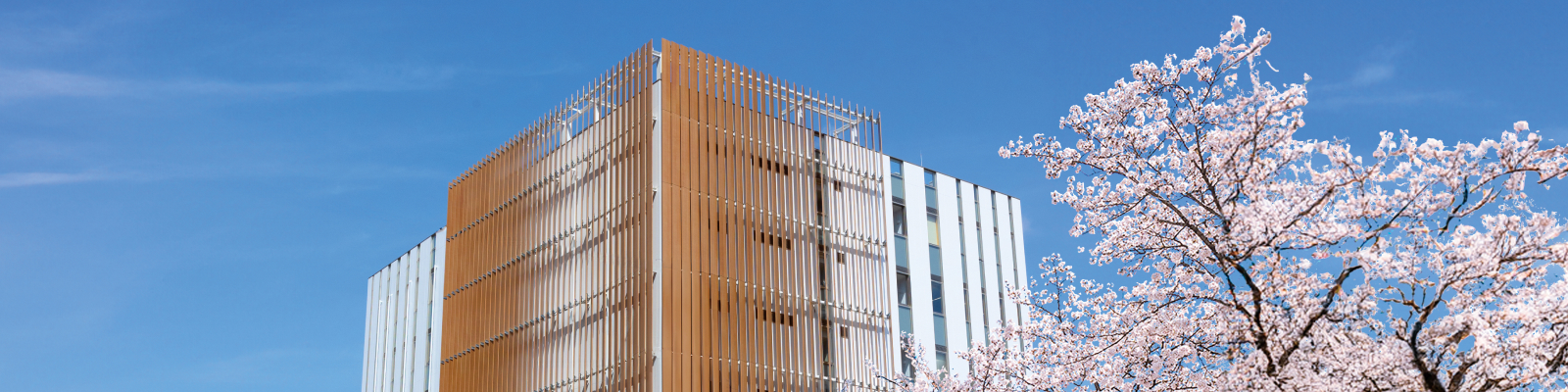
Learning to Support a Liberal Arts Education
Developing Potential and Nurturing the Ability to Support a Lifelong Career
Notre Dame Seishin University, as a “Liberal Arts College That Integrates Knowledge Holistically,” Has
Established A Framework Of “Universitywide Common Classes” That Serve As The Foundation For Learning In
“Each Departmental Class” And Aims To Cultivate Well-Balanced People Capable Of Making Comprehensive Judgments. In Addition, Each Center And Research
Institute That Supports liberal arts education, including “university-wide common classes,” will supportstudents’ learning.
Liberal arts classes:
Cultivate a broad perspective and a rich spirit in the tradition of character education
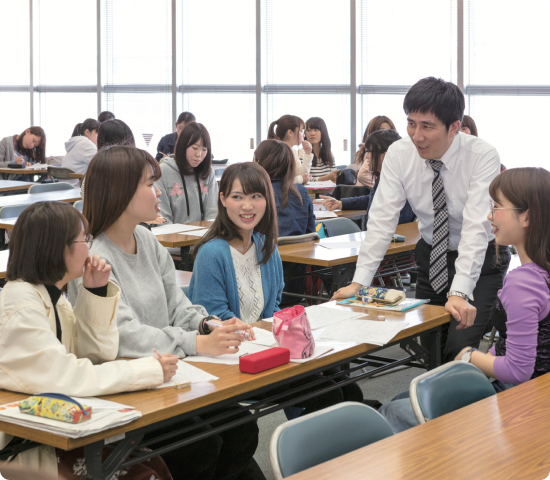
This is a group of classes designed to nurture the ability to survive as anindependent individual in today’s drastically changing society. The “Self-Reliance Development Class Group A” is a series of lectures designed to cultivate the ability to actively look at social situations, understand them from an international perspective, analyze them, and integrate them into a coherent whole. The “Self- Reliance Development Class Group B” is an interactive course that incorporates active learning. Through presentations and discussions, students develop the ability to think and learn more independently. In the small-group “Seminar for Self-Reliance Development,” students deepen their interest in society through dialoguein the form of exercises.
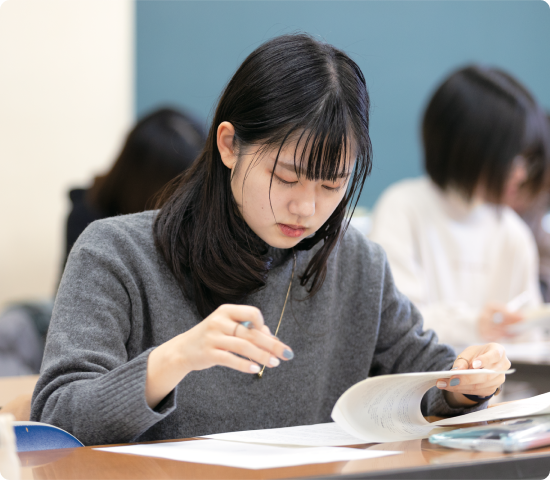
Self-reliance development classes:
Refine interactive thinking and practical skills with an eye on contemporary society.
This is a group of classes designed to nurture the ability to survive as an independent individual in today’s drastically changing society. The “Self-Reliance Development Class Group A” is a series of lectures designed to cultivate the ability to actively look at social situations, understand them from an international perspective, analyze them, and integrate them into a coherent whole. The “Self-Reliance Development Class Group B” is an interactive course that incorporates active learning. Through presentations and discussions, students develop the ability to think and learn more independently. In the small-group “Seminar for Self-Reliance Development,” students deepen their interest in society through dialogue in the form of exercises.
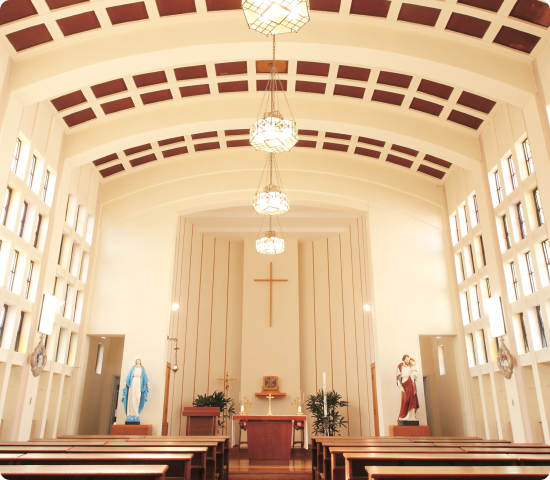
Christian classes:
Study Christian values, the “founding spirit” of the school, and explore the meaning of life.
Founded by the Congregation for the Education of the Catholic Church, the University’s educational philosophy is based on Christian values that regard each individual as an irreplaceable being. Through these values, the “Christian classes” cultivate a sense of humanity that enables students to deeply pursue the meaning of life, to empathize with others, and to serve others. “Christian Studies” offers a wide variety of classes to deepen students’ understanding of Christian thought, history, culture, and other aspects of Christianity
Information technology classes:
To acquire the necessary moral and professional skills to live in an information society.
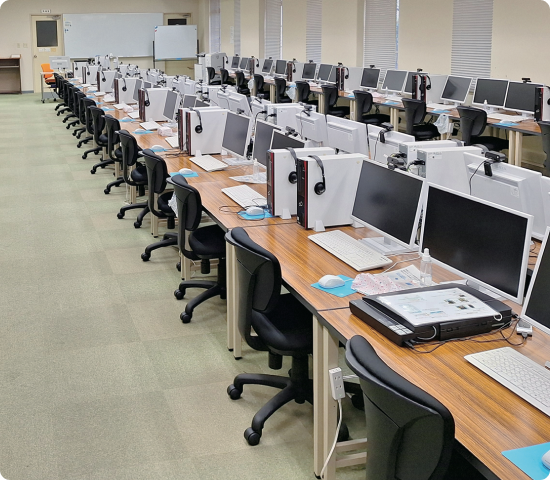
In the Information technology classes, students will acquire basic skills to collect, organize, and document information accurately while safely using the Internet as information literacy. In addition, as the basis of data science, students learn statistics and various data analysis methods to help solve social problems. The knowledge and skills acquired in these information technology-related classes can be used not only in writing reports and graduation theses, but also in all aspects of society.
Health and wellness classes:
Aim to establish a healthy lifestyle through both practical skills and theory on “mental and physical health”.
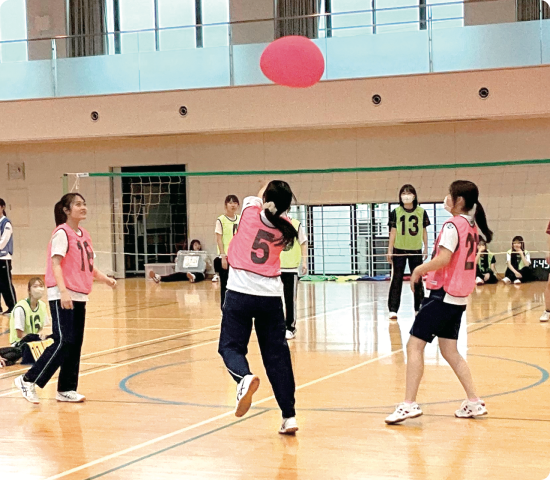
In “Physical Education Practicum,” students choose one class from “New Sports,” “Beauty and Health,” and “Challenge Sports,” according to their own preferences, and enjoy engaging in physical activities while improving their physical fitness and building a well-balanced and healthy body. In “Mental and Physical Health Theory,” students learn about diet, exercise, rest and sleep, as well as sex and health, anemia, infectious diseases, drinking and smoking, drug abuse, and worklife balance, while deepening their practical understanding to improve their own quality of life.
Aim to establish a healthy lifestyle through both practicalskills and theory on “mental and physical health”.
In “Physical Education Practicum,” students choose one class from “New Sports,”“Beauty and Health,” and “Challenge Sports,” according to their own preferences, and enjoy engaging in physical activities while improving their physical fitness and building a well-balanced and healthy body. In “Mental and Physical Health. Theory,” students learn about diet, exercise, rest and sleep, as well as sex and health, anemia, infectious diseases, drinking and smoking, drug abuse, and. worklife. balance, while deepening their practical understanding to improve their own quality of life.


